All people, companies and projects shown are synthetic Rillsoft sample data – from the shipped industry packages or, where stated, from a test project.
The prompt
Which shared machines create the largest bottleneck? Compare demand and units per machine type.Changes the project (one undo step)
In your words
- Construction: On which days do more tasks need the mobile crane than there are units in the fleet?
- Manufacturing: When do series ramp-up and retooling compete for the third assembly line?
What you need
- An open project or portfolio with a machine fleet.
- Read-only mode is not enough: the AI switches the machine capacity view – one undo step; project data stays untouched.
- Machines are included in the sample packages mechanical engineering, manufacturing and construction.
What you get
In the sample package Construction and modernisation the mobile crane is a single unit in the fleet. Four tasks of the base-load project Running building sites share it in the first quarter of 2027 (4 January to 31 March) – without shared use each would claim it, four against one on all 61 working days; with shared use recorded it stays at one against one. The package’s largest bottleneck is another unit: the Facade scaffold 500 m², one unit, peak demand two, above capacity on 61 working days of the first quarter, followed by the concrete pump (10 days) and the tower crane (7 days). The answer names per machine type units, peak demand, days above capacity and the tasks sharing the unit.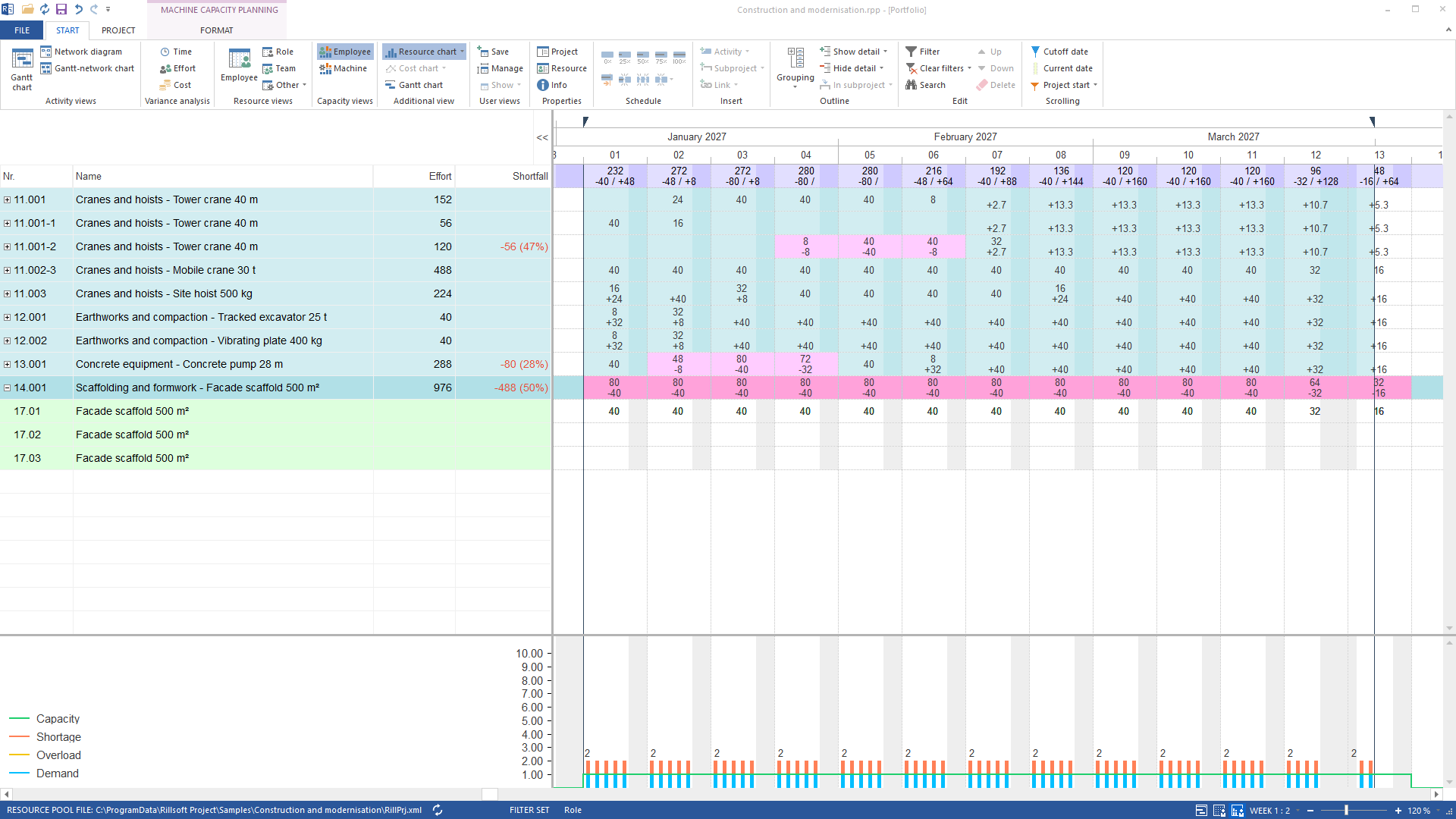
Why it is useful
Single units such as crane, concrete pump or machining centre decide the construction sequence. The answer shows whether the bottleneck is real or only a missing shared-use entry.How the answer is produced
The AI sets the machine capacity view, reads the report and adds the tasks with shared use from the project tree. What is shared counts once in the report.rillsoft_view_state_apply rillsoft_analysis_report_get rillsoft_project_tree_get
Limits
Two projects needing the same single unit at the same time remain two claims; shared use applies per project. Material has no supply and appears in no bottleneck analysis. The Rillsoft Project product page describes machines as resources.Try it
Get started- Industry package
06_bauwesen- Product version
- Rillsoft Project 10 (Build 10.0.623)
- Last verified
- 2026-09-27
- Verification
- Figures and statements verified on the named sample package against the named product build – MCP session, view and report; German and English package with identical figures.